
Expanding Horizons (1971–1999)
Ben Posten's 43 Years at Lovett
Ben Posten showed up at Lovett with a warm smile, a bag of moon pies, and a conviction he's never let go of: that learning should be joyful. 43 years later, that conviction had become something closer to institutional memory, a living thread connecting Lovett students who graduated decades apart.
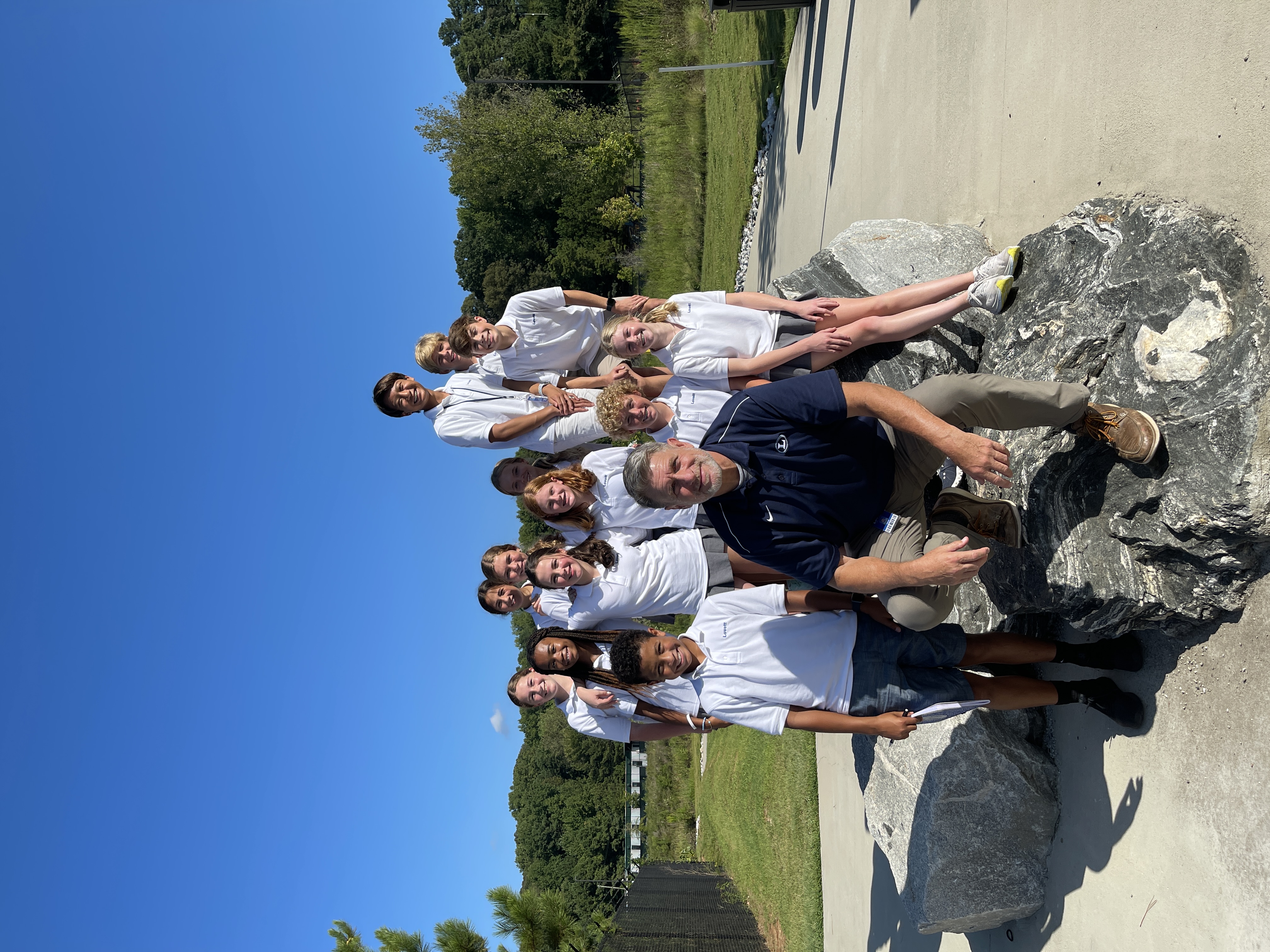
Ben arrived at Lovett in 1983 to teach history and civics, subjects that can easily go flat in a classroom if a teacher lets them. Ben didn't let them. He treated the past as something to be walked through rather than memorized, and he took his students with him, literally. He led them along backpacking trails in North Georgia, where civics lessons about leadership and self-reliance played out in real time on a mountainside. He walked them through the National Mall in Washington, D.C., putting them in front of the buildings and monuments that the textbooks could only describe. For Ben, teaching leadership and service was never a lecture topic; it was a set of habits students built by doing, with him alongside them.
Over the years, the classroom became almost secondary to the relationships built inside it. Students who arrived as sixth graders became adults who still called him by name at reunions. Colleagues who started as fellow young teachers became lifelong friends. And a pattern started to repeat itself in a way unique to a place with Lovett's history: parents who had once been Ben's students began walking their own children into his classroom, decades later, curious whether the same thing might happen twice. It did. He'd greet former students' children with the same attention he'd given their parents, sometimes even resurrecting the nicknames he'd given those parents back in eighth grade—a small, specific kind of continuity that only a 43-year tenure can produce.
That continuity extended into the life of the school itself. Ben became one of the faculty members trusted to interview prospective students during the admission process, occasionally interviewing the children of families he'd taught a generation earlier. He taught one student how to tie a tie, then, years later, taught that student's own children what it meant to be part of something larger than themselves. Somewhere in there, he also became known around campus as an enthusiastic and vocal participant in the annual step competition, complete with nightly progress updates—proof that his energy for Lovett life extended well past the classroom door.
Off campus, Ben built a reputation as someone who knew Atlanta as thoroughly as he knew Lovett, turning up at neighborhood spots, exploring the city on foot, treating the metro area itself as an extension of the classroom. Colleagues came to see him as a kind of institutional compass. Chelle Wabrek, former Associate Head of School, once described him as "a guardian of all that this school should remain," someone who could quote founder Eva Lovett's philosophy from memory, and who modeled, in his own daily habits, what it looked like to actually live out the school's values rather than just repeat them.
By the time Ben's tenure reached the four-decade mark, the story of his time at Lovett had become, in a sense, a story about the school's continuity—proof that an institution's character survives not through buildings or milestones alone, but through the people who keep showing up, year after year, generation after generation.