Changing Times (1954–1970)
A Legacy Beyond the Field: Bill Conley
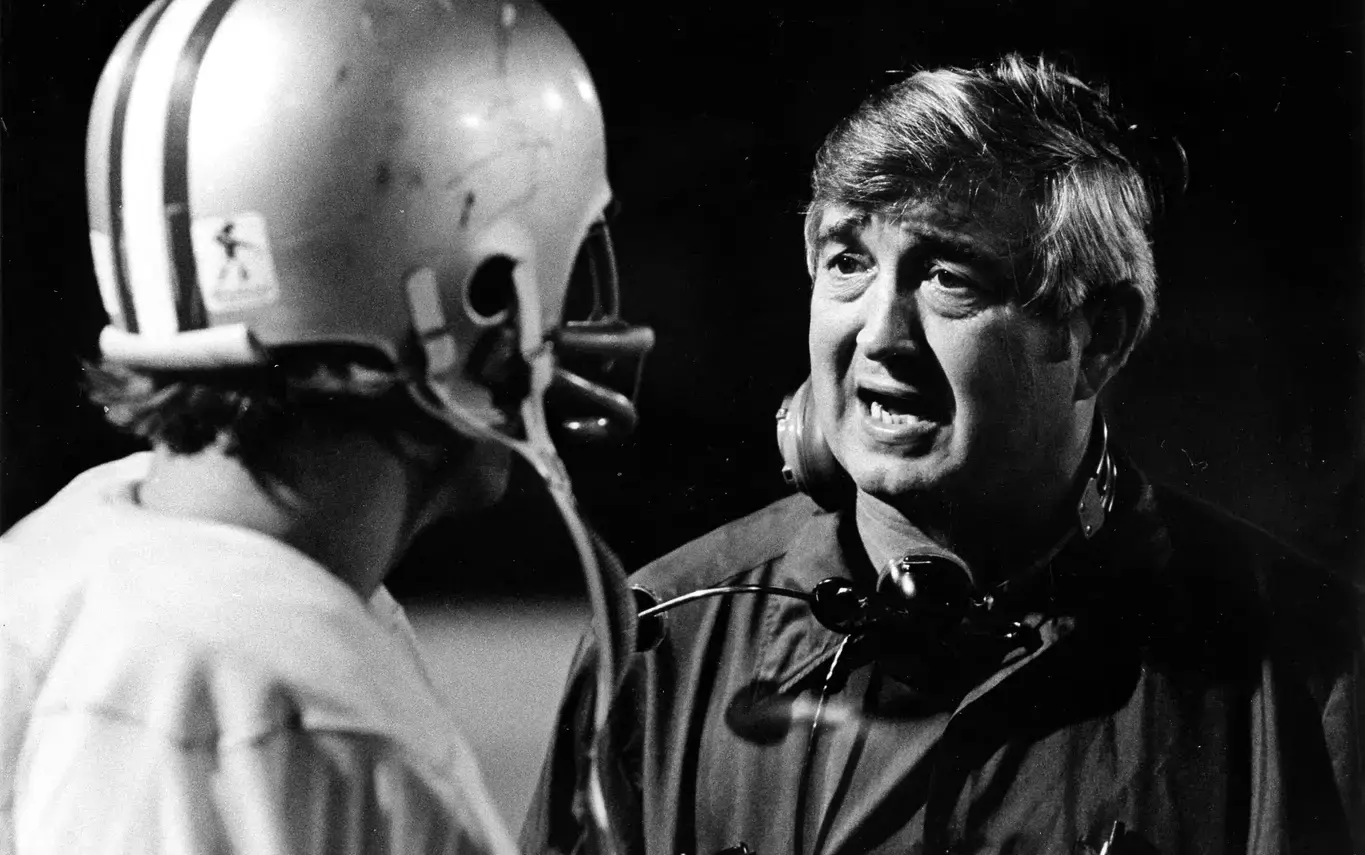
“He commanded respect, and you gave it—no questions asked,” said Carter Pope ’74.
That was Bill Conley. A veteran of the U.S. Coast Guard, Conley graduated from Murphy High School, Georgia Institute of Technology, and Georgia State University. Before joining The Lovett School, he served the school communities of Marist School and St. Pius X.
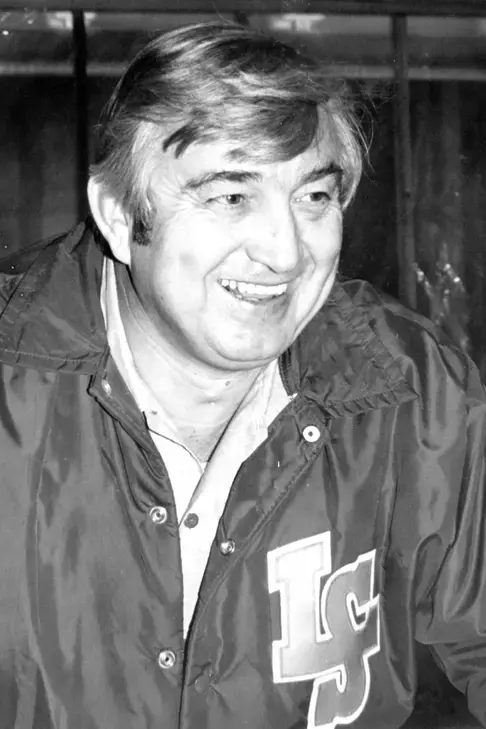
Arriving at Lovett in 1963, Conley quickly transformed the Lions into a football powerhouse.
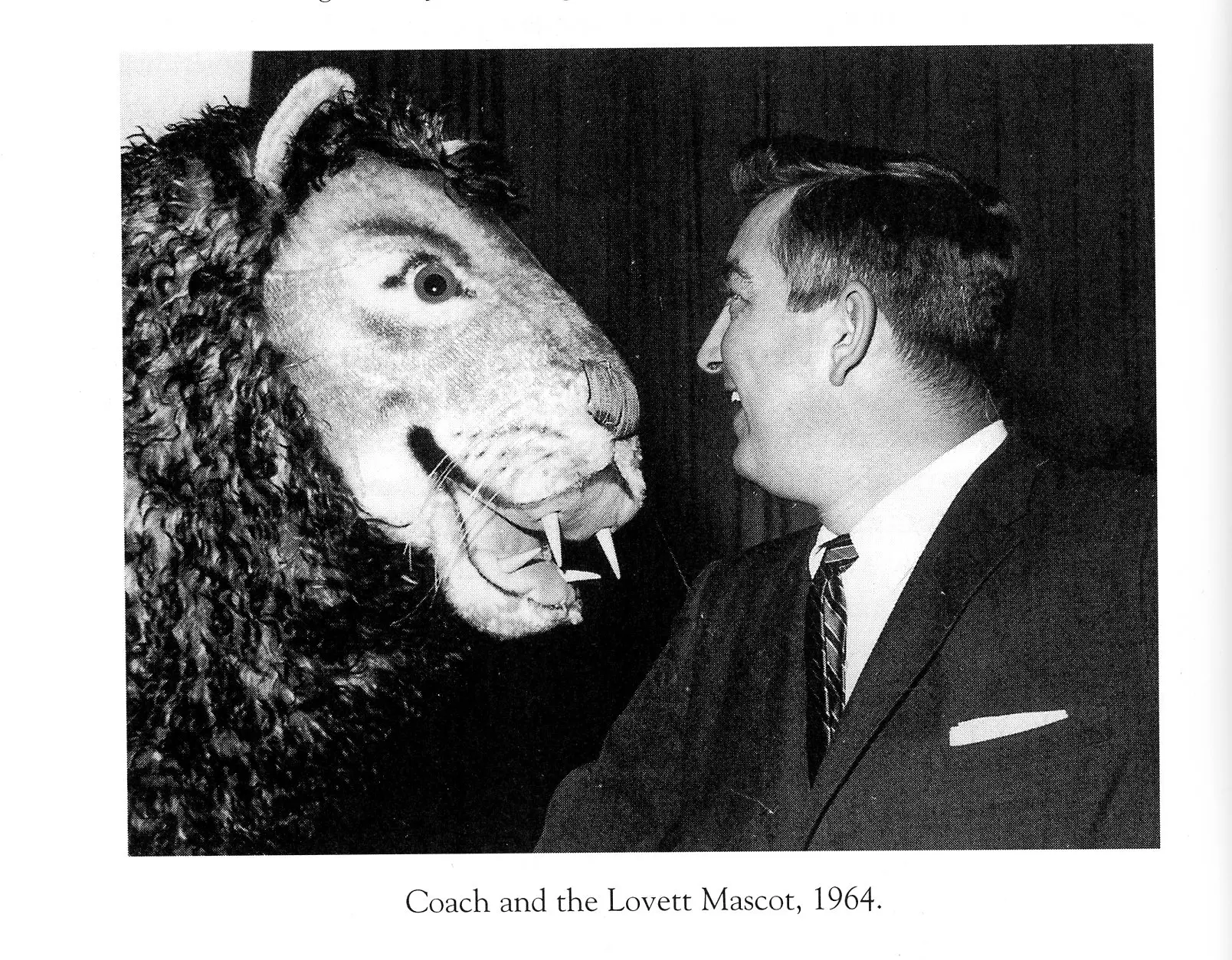
From 1963 to 1976, his teams were defined by grit and discipline. The 1964 “Mighty Mites” went 11–3 and won the North Georgia Championship. In 1970, his undersized team, without a player over 190 pounds, won the State Championship, outscoring opponents 410–32 and earning a place in Georgia high school football lore. He retired from coaching with a 96–45–5 record, and his impact was immortalized at Conley-Oakley Field at Kilpatrick Stadium.
While he started his Lovett career in football, Conley’s contributions to the school extended well beyond the gridiron.
Over 33 years at Lovett, he earned respect through daily service to students as the Upper School Assistant Principal. Known for a distinct style of discipline, he could silence a rowdy assembly of 1,600 students with a single "Good morning."
He famously communicated through a system of sharp whistles: one to pay attention, and a dreaded double-whistle that signaled you were in real trouble. Yet, for all his toughness, he had a personal touch, often greeting students with nicknames like “Slick,” “Ace,” or “Dude.”
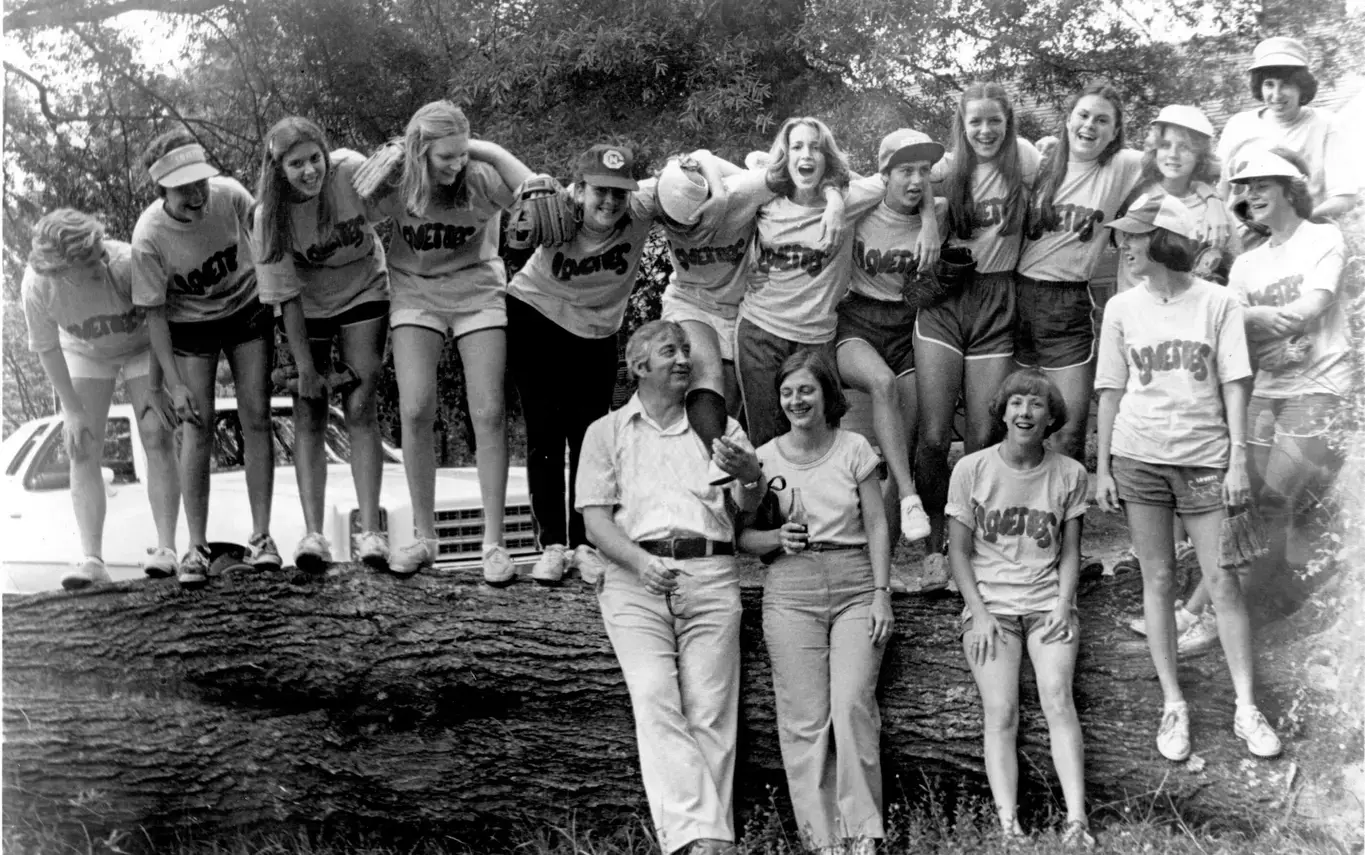
His influence also reached the arts and girls' athletics. As a gifted artist and chair of the art department, he worked in oil, acrylic, and charcoal. His most cherished tradition was a 15-year labor of love: hand-drawing a personalized watercolor caricature for every graduating senior athlete, cheerleader, and manager—pieces that remain prized family heirlooms today. He also founded the girls’ softball program, where he was known for a supportive, "fatherly" coaching style that balanced his hard-nosed reputation.
Across all these diverse roles, his focus remained the same—developing character in all aspects of life. He passed away in 2011, survived by his wife of 56 years, Phyllis, his family, and generations of Lovett students shaped by a passion that lives on at the school even today.