
Changing Times (1954–1970)
Kilpatrick Stadium: The Lion's Den Along the River's Bend
From a lion sculpture that towered over the scoreboard to the Victory Bell that rings today, Kilpatrick Stadium's riverside setting has shaped six decades of Lovett athletics.
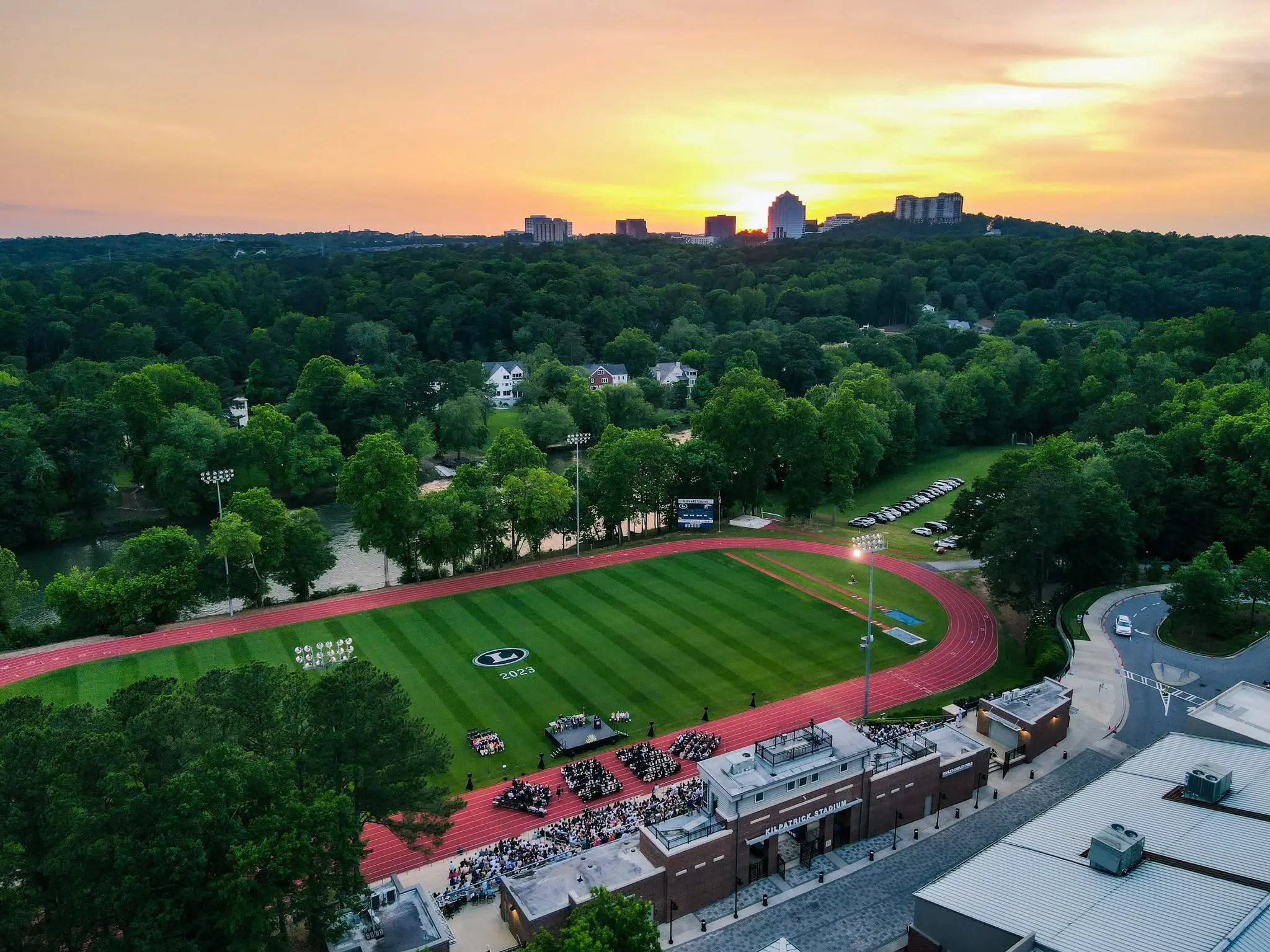
Lovett has always had a close relationship with water, whether it is the pond that greets visitors to the campus or the Chattahoochee River that forms the campus's western boundary. Faculty member James Warren recognized this, choosing to include the words, "By the ancient rivers gleaming, down the pleasant shores of home" in the lyrics of the Lovett Hymn.
The Lovett campus has changed a great deal since moving to its location off Paces Ferry Road in 1960. One structure that has remained constant on the campus is Martin E. Kilpatrick Stadium along the shores of the Chattahoochee River. The campus did not originally have sports facilities, as the academic buildings were the priority. Field sports were held off campus at St. Pius X Catholic High School.
The board eventually recognized the need for on-campus athletic facilities to fulfill the school's goal of developing the whole student, as sports foster character and teamwork. A site along the Chattahoochee River was chosen, in part because no academic structures could be built within a floodplain, whereas an outdoor field would not face this restriction. Construction began in 1965, and it was ready to open in time for the 1966 season.
Having the Chattahoochee River along the field's western border required unique planning. The seating area in the stadium would be on the eastern side of the field, with the river forming the backdrop on the west side. The concession stands, locker rooms, restroom facilities, and entry gates would also be on the field's eastern side. This unique design is what makes the stadium's setting so special. Coincidentally, this design provides a competitive advantage for Lovett's teams. The visiting sideline is on the western side of the field, far away from where their fans are seated, depriving them of the energy they would normally feel from their band, fans, and cheerleaders. | 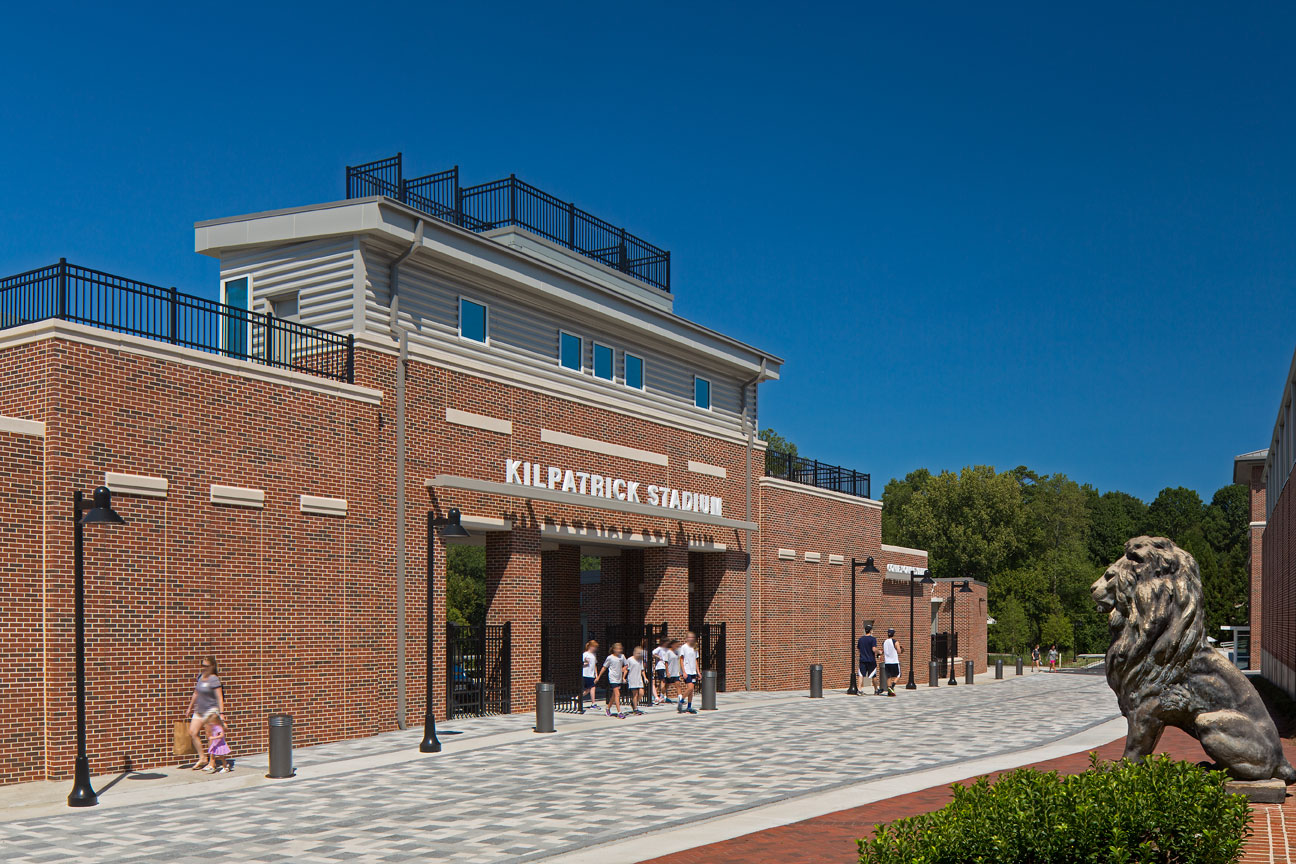 |
A unique feature of the stadium's early days was a large lion sculpture designed by Coach Bill Conley, a noted artist. The lion was taller than the scoreboard, and it loomed over the visiting team's sidelines. The lion burned down after a mysterious fire in 1976. In recent years, new lions have been added to the stadium, with the Pride of the Lions plaque on the concessions building, and the Young Lions statue behind the north end zone. A Victory Bell has also been added atop the press box, and is rung after each Lovett score or win.
For many years, the facility was known simply as Lovett Stadium. That changed in 1980, when it was named in honor of Martin E. Kilpatrick, who spearheaded the original fundraising efforts to build the stadium in 1965. In 2001, the playing field was officially named Conley-Oakley Field, honoring the two Lovett legends who coached the Lions football team from the stadium's opening in 1966 through the next three decades.
While many fans know it as the "football" stadium, it has also been home to soccer, lacrosse, field hockey, and track and field, and has hosted the Lower and Middle School Field Days, the Run 'n Lovett race, and, in recent years, Commencement. Today, the Lovett campus is undergoing massive renovations as Rita Anne Rollins Hall is being constructed; however, Kilpatrick Stadium will always be "the Lion's Den along the River's Bend."