
21st Century (2000–present)
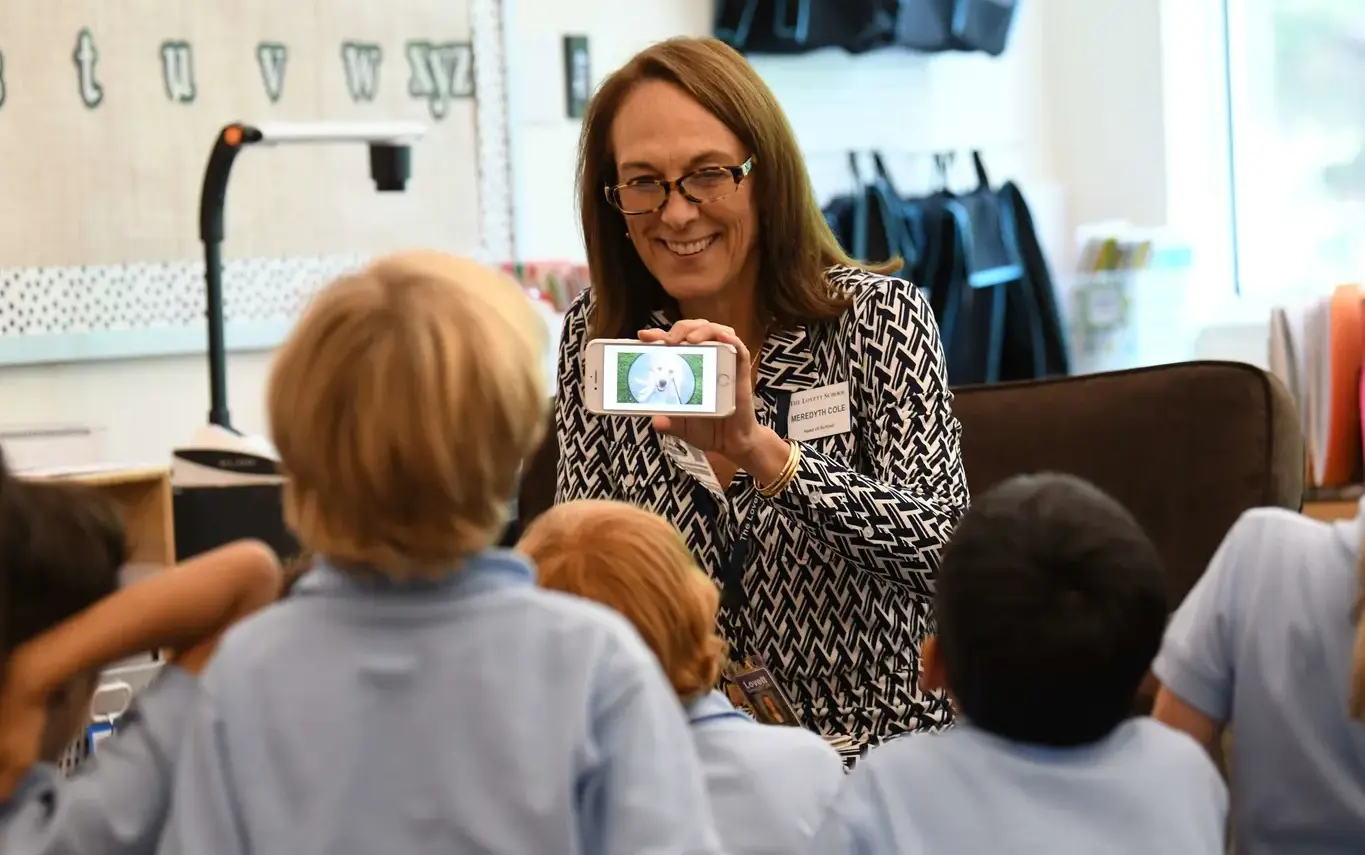
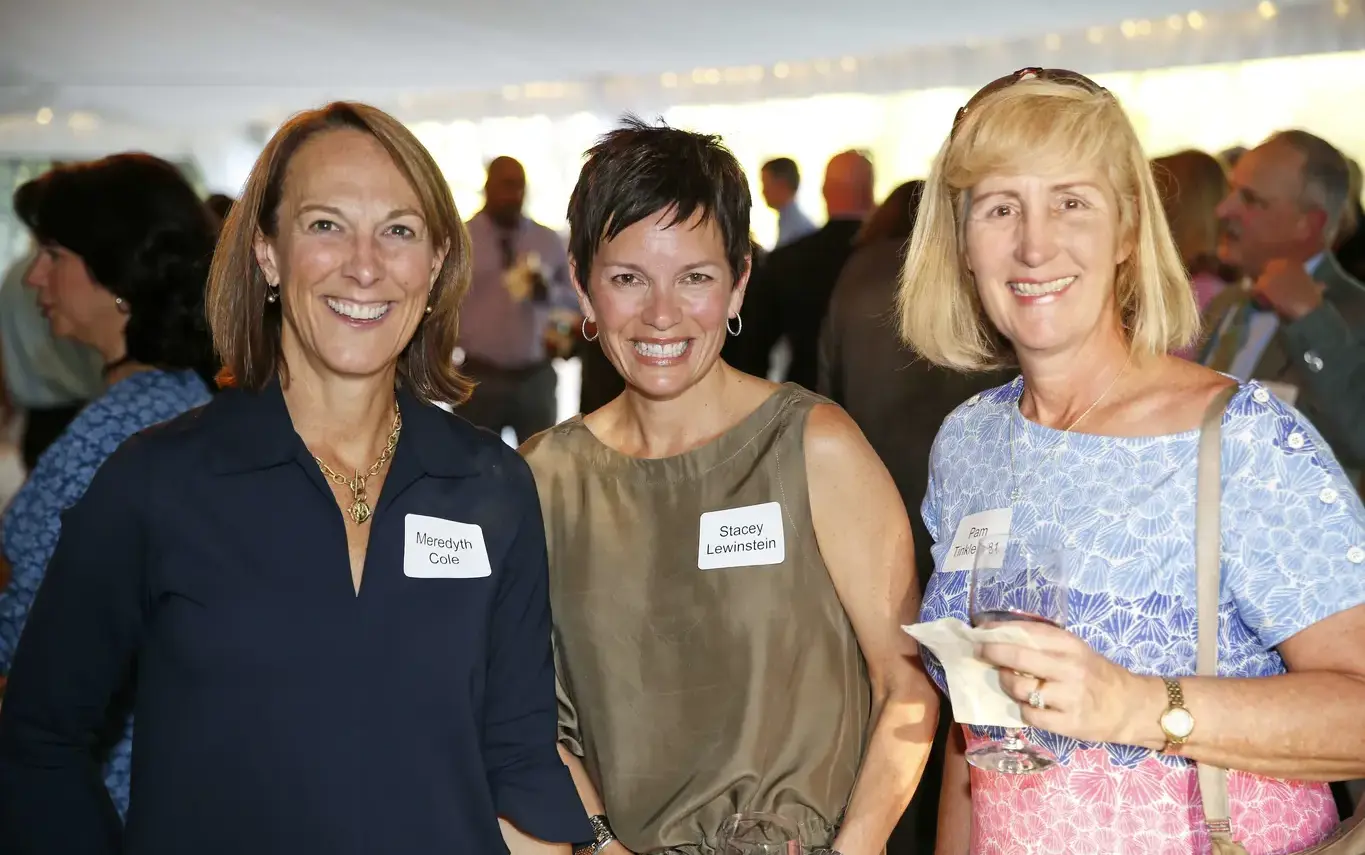
Meredyth Cole: The Bluebird’s Promise
Above the desk of The Lovett School's Head of School hangs a hand-painted portrait of Eva Edwards Lovett.

Eva looks down from the canvas with a faint smile and a settled expression that reads as resolute, unhurried, and certain. She watches everything that happens in that office: the phone calls, the difficult conversations, the careful planning of a school year. The woman who sits beneath the portrait, Meredyth Cole, is the first woman to lead the school since Eva herself.
Almost a century separates them. Eva opened her school for twenty children in 1926, in the parlor of her own home on Peachtree Place. Meredyth is leading Eva's intellectual descendants, more than sixteen hundred children across three divisions, into the school's second century.
The setting has changed almost beyond recognition. The work has not. Meredyth does not call it “her own vision at Eva's school.” She calls it Eva's vision, kept alive.
Meredyth grew up the daughter of two educators on the campuses of boarding schools where her father served first as a chaplain and later as a head of school. She has joked that she has gone to school every day of her life since she was four years old. The houses where she lived backed up to playing fields and academic buildings. Dinner-table conversations focused on students, faculty meetings, and curriculum.
In early elementary years, Meredyth was diagnosed with dyslexia. By fourth grade, she was in the lowest reading group, “the bluebirds,” by the polite fiction every student of that age sees through. She was a child whose father ran a school. She was also a child whose teachers, gently and without meaning to, had sorted her into the slowest column of a hierarchy she could feel. The experience did not break her; it became part of how she leads.
She has a way of explaining her philosophy in two trees. At Lovett, Meredyth says, the work is to grow Georgia pines, not Bartlett pears. Pears grow fast and tip over in the first hard wind. Pines go deep before they go tall.
That metaphor is the spine of how she runs the school. It shapes how teachers design low-stakes practice, how Lovett measures success over time rather than in the moment, and how the school thinks about resilience, growth, and the long arc of a childhood.
She studied at the University of Virginia and then started her career at The Madeira School, a girls' school in Virginia's countryside, where she would stay for 23 years. She arrived as a young teacher and left as Acting Head of School. In between, she taught, ran communications, served as Director of Enrollment, then as Assistant Head, and all the while carefully observed how a school operates. Her closest mentor was Betsy Griffith, the school's longtime Head, and from her, Meredyth learned what it looked like for a woman to lead an institution with intellect, conviction, and an appreciation of the institution’s past.
She has said that being able to see a version of her own future self in another woman in the role had as much to do with her path to a headship as anything. It is also why the first female Head of School at Lovett since Eva herself matters at this moment in the school's history. For the students who walk past her office every day, she is what Betsy Griffith was to her: visible and possible.
She moved on to The Episcopal School of Dallas in 2013, where she served as Head of School for five years, completed the school's first five-year strategic plan, and led a $75 million capital campaign. And then in July of 2018, she came to Lovett.
In her first official week as Head of School, before students or faculty had returned, Meredyth walked across Williams Plaza alone. In the silence, she said, she had a sensation she did not expect: that the place itself was alive. That Lovett had a heart.
Less than two years later, a school built on community, presence, and physical place was forced to teach its students through screens. Meredyth did the work of reassurance, of crisis decision-making, of communicating with families who could not see their children's classrooms or teachers. And when Lovett reopened, she used the disruption to ask harder questions about what a school is for.
The years since have been the most consequential of her tenure. The One Lovett Campaign secured more than $100 million in philanthropic support, anchored by a $30 million gift from the Rollins family for Rita Anne Rollins Hall, among the most generous gifts ever made to an independent K–12 school in the country. The endowment has grown from $101.3 million to $158.2 million. Student retention has reached 97 percent. The school's three divisions, once running largely in parallel, are now unified under shared leadership, shared policies, and a common institutional identity.
The Episcopal commitment has been articulated more sharply: not as ceremony but as practice, a daily insistence on dignity as shared ground, on worship and study and service as genuine acts. Meredyth herself teaches a senior religion class in Ethical Leadership.
In 2024, Meredyth declared Lovett a phone-free academic day for every student from kindergarten through twelfth grade. The decision drew attention from peers and parents. It drew opposition from some quarters and gratitude from many others. The decision held, and fortunately, has been followed by schools across the state, nation, and world. It is the kind of decision a head of school makes when she is growing Georgia pines.
The campus around her has changed, too. A new perimeter road that pulls traffic off neighborhood streets opened in 2023. The new Rogers Playground in the Dell, which she has called "... the most extraordinary playground I’ve ever seen,” opened in 2024. A 380-space parking opened in 2025. A bus program started in 2019 has redrawn the school’s relationship with its community. None of these changes is glamorous on its own, but together they are the gradual, cumulative work of an institution preparing itself for its next one hundred years.
The most visible piece of Meredyth's stewardship is yet to rise from the ground. Rita Anne Rollins Hall, the new community center, is set to begin construction as the school celebrates its centennial. The building will bring together all three of Lovett's divisions. The lower schoolers will be able to see the seniors they are becoming. The seniors will be reminded of who they once were.
This past May, on the morning of Closing Chapel, Meredyth watched the Class of 2026 process out flanked by teachers, coaches, and staff who had known them longest. Then she watched those same seniors leap into the pond in front of the old community center, in the muddy and beloved tradition that happens every Lovett spring. She wrote to the community about the gravity of what was being left behind and the joy of what was being leaped toward. The Class of 2026, she noted, is the final graduating class of Lovett's first century.
Meredyth has led a centennial before. At Madeira, more than twenty years ago, she ran the programming and communications for that school's hundredth anniversary. Now she is doing the same work at Lovett, shaping how an entire community makes meaning of one hundred years. It is not work she does alone.
The portrait above her desk was painted long after Eva's lifetime. The woman in it would not recognize the parking deck, the perimeter road, the digital scoreboards, or the conversations about artificial intelligence now unfolding. She would immediately recognize the school below. The grade levels she established. The whole-child philosophy she championed.
The commitment to character that has been kept alive, decade after decade, by the people who took up the work after her.
The school Eva built is the school Meredyth leads. Both women, in their own century, took the work earnestly enough to make it thrive.